
I was visibly shaken. The violinist noticed the look on my face, saw the goosebumps on my arms, and walked toward me. He leaned in and whispered:
“If a violin is like a dog—loyal to its player—a Stradivari is a cat. It does what it wants… but it gives you unforgettable emotions. I’ve played for 30 years, and it took me 5 just to learn how to play a Stradivari.”
Even now, the emotion is still strong. Witnessing a violinist perform on a Stradivari violin, just steps away from you, is priceless. You can hear every nuance of the sound. You sense the stunning craftsmanship in its build. You feel the tension—the physical struggle between the musician and the instrument, as if it must be tamed before it can sing.
Guarded like royalty
In Cremona, it’s not uncommon to see large groups of police officers escorting… not a politician, nor a celebrity, but a violin. Yes, a Stradivari.
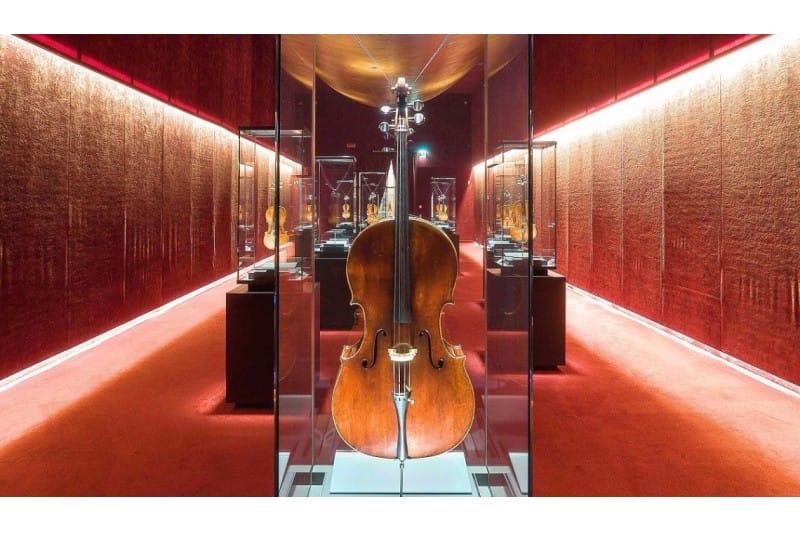
Each time one is moved from its glass case in the Museo del Violino to a concert stage, it’s done under full escort. Because you don’t just transport a masterpiece… you protect it.
Why a Stradivari violin must be played – Not just preserved
It might seem strange that instruments worth tens of millions aren’t locked away in a vault. But a Stradivari violin isn’t just an artifact—it’s alive. And like anything alive, it needs to breathe, to move, to vibrate.
These precious violins must be played regularly. Not out of tradition, but necessity.
The natural glues used by Stradivari over 300 years ago are organic and sensitive to changes in humidity and time. If the violin isn’t played, the joints begin to dry out, the wood stiffens, and the unique resonance that defines a Stradivari begins to fade.
Sound needs flow. Music needs motion. Silence, in this case, is slow death.
This is why museums like the Museo del Violino in Cremona don’t just display these masterpieces behind glass. They schedule regular performances, allowing professional musicians to keep the instruments active and healthy—while giving lucky visitors the once-in-a-lifetime chance to hear history with their own ears.
Visit the Museum with the Stradivari Tour
To understand this deep connection between sound, wood, and emotion, you need to experience it yourself. With the Stradivari Violin Tour in Cremona, you’ll walk through the Violin Museum, home to masterpieces by Stradivari, Amati, and Guarneri.
You’ll learn how these instruments are built, how they survive, and why they still matter.
Most importantly—you’ll hear them played live.
This isn’t just a tour. It’s an encounter with history, passion, and sonic perfection.
When emotion doesn’t need explanation
There aren’t many things in life so powerful that they move even those who lack the “knowledge” to fully appreciate them.
But the sound of a Stradivari is one of those rare things.
It doesn’t matter if you understand it.
You’ll feel it anyway.